
Laserline at Formnext 2026: Diode Laser Systems for Additive Manufacturing and Cladding
Published:
Republished by Newlife - MIM. All rights belong to the original publisher; see Source below.
Laserline will present diode laser-based solutions for additive manufacturing and laser cladding at Formnext in Frankfurt am Main from November 17 to 20, 2026. The focus will be on a new, high-brightness laser system for processing copper in a powder bed. Other topics at Booth C122 in Hall 12 include wire-based coating processes, the coating of internal and hard-to-reach surfaces, and automatic process control.
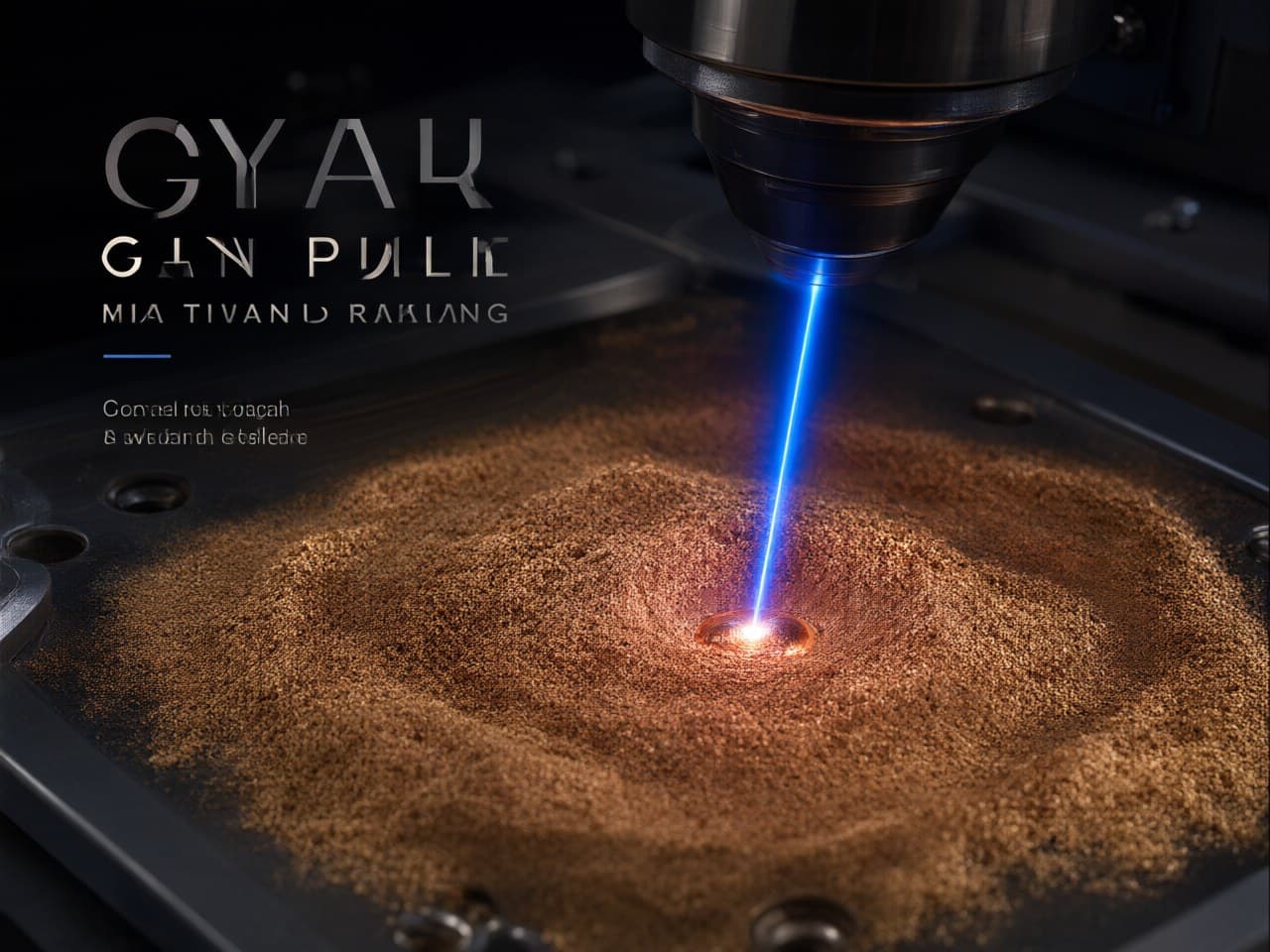
Laserline's new blue high-brilliance laser system is designed for the additive manufacturing of delicate, high-density copper components using the powder-bed process.
The new system for the Laser Powder Bed Fusion (LPBF) process is based on a blue diode laser. Its radiation is readily absorbed by non-ferrous metals. According to the manufacturer, this enables efficient additive manufacturing of components made of gold, copper, and other reflective metals using the powder bed process.
The laser system has an output of 750 watts and features a scanner unit designed to achieve exceptionally small spot sizes. At its booth, Laserline is showcasing complex, high-resolution cooling structures. These are intended to illustrate the capabilities of high-brilliance blue lasers in the production of delicate components that, according to the manufacturer, are pore-free.
Wire-based coating using single-wire technology
In the field of laser cladding, Laserline presents solutions for wire-based cladding using single-wire technology. Depending on the material, either infrared or blue lasers are used. In combination with customized beam shaping, these lasers are designed to enable controlled, stable processes, reproducible coating properties, and efficient use of materials.
Examples of applications on display at the booth include coated plain bearing pads with white metal layers on steel and copper substrates. These demonstrate the potential uses of laser cladding for demanding applications, such as in axial plain bearings.
A New Look for Interior Coatings
Laserline has developed the OTI solution for high-performance internal coating of components such as pipes, pump cylinders, and extruder parts. According to the company, the new optical design also enables the coating of complex component geometries and hard-to-reach surfaces, such as those found on truck brake discs.
Thanks to its compact design and angled nozzle shape, the OTI optical system enables the coating of areas that are difficult to reach with conventional optical designs. Immersion depths of up to several meters facilitate precise laser beam guidance along the pipe axis. This is intended to achieve uniform coating formation over the entire length of the component with high reproducibility.
According to Laserline, when combined with high-power diode lasers, high material deposition rates and process speeds are possible even on larger internal surfaces. The space-saving design also allows the optics to be integrated into automated manufacturing processes. At its booth, the company is showcasing a truck brake disc as an example.
Sensors regulate the laser power
Another development is a cladding design with integrated sensors for process monitoring and control. The closed-loop solution collects process data in real time and uses it to automatically adjust the laser power.
This is intended to ensure consistent coating quality even under varying process conditions. According to the manufacturer, this reduces scrap and rework and supports quality assurance in the coating process.
Source
- industrial-production.de (2026-11-19) - Original article: Laserline at Formnext 2026: Diode Laser Systems for Additive Manufacturing and Cladding - https://www.industrial-production.de/additive-manufacturing/laserline-at-formnext-2026--diode-laser-systems-for-additive-manufacturing-and-cladding.htm