
How Metal Injection Molding Works
Metal Injection Molding — near-net-shape manufacturing for complex, small, high-volume metal parts.
What is MIM?
MIM is short for Metal Injection Molding. It is a near-net-shape molding technology that injects the mixed and refined metal powder and binder into the mold, combining the design freedom of plastic injection molding with the mechanical properties of sintered metal.
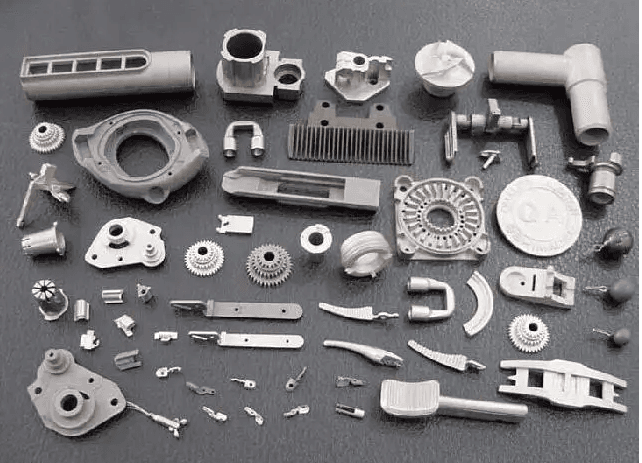
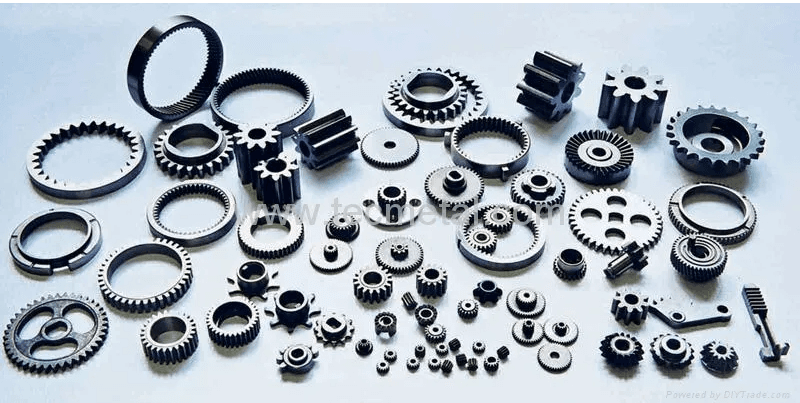
Process Flow
- 1
Mixing
Metal powders are uniformly mixed with approx. 40 vol% polymer binder.
- 2
Granulating
The mixture is kneaded and extruded into homogeneous feedstock granules.
- 3
Injection Molding
Feedstock is heated to ~190 °C and injected into the mold, like plastic injection — the part geometry is formed.
- 4
Debinding
The binder is removed by catalytic or thermal debinding; the part becomes a pure metal-powder brown body.
- 5
Sintering
High-temperature densification in vacuum or atmosphere-protected furnaces; relative density ≥ 95%.
- 6
Post Processing
Sizing, CNC finishing, heat treatment, polishing, plating and other secondary operations.
Precision Capability
| Dimension Range | General Tolerance | Special Case |
|---|---|---|
| 1–4 mm | ±0.05 mm | ±0.03 mm |
| 4–10 mm | ±0.07 mm | ±0.05 mm |
| 10–20 mm | ±0.10 mm | ±0.08 mm |
| 20–30 mm | ±0.15 mm | ±0.1 mm |
| 30–50 mm | ±0.25 mm | ±0.2 mm |
| >50 mm | ±5‰ | ±3‰ |
| Part Weight | 0.2–50 g | 0.1–200 g |
| Wall Thickness | ≥0.5 mm | ≥0.1 mm |
MIM vs Other Processes
| Item | MIM | PM (Powder Metallurgy) | Precision Casting | Machining | Stamping |
|---|---|---|---|---|---|
| Density % | 98–99 | 85–92 | 95–99 | 100 | 100 |
| Part Weight g | 0.01–1000 | 5–2500 | >1 | >1 | >1 |
| Tolerance % | 0.3–0.5 | 0.1 | 0.5–1.0 | <0.1 | 0.5–2.0 |
| Strength % | >97 | 75 | >95 | 100 | 100 |
| Wall Thickness mm | 0.1–10 | >2 | >2 | >1 | <5 |
| Surface Roughness µm | 1 | 1–5 | 5 | 0.2–4 | 1–5 |
| Complexity | High | Low | Medium | High | Low |
| Production Volume | High | High | Low | Low | High |
| Material Range | High | Medium | Medium | Medium | Medium |
When to Choose MIM
MIM is ideal for
- Complex 3D geometries that need many machining setups
- Small, thin-walled parts (wall < 0.2 mm) hard to machine or press
- Monthly demand above 20,000 pcs — bigger volume, bigger advantage
- Hard-to-cut materials such as stainless steel, nickel and titanium alloys
- Parts with density, strength or surface-finish requirements
- Consolidating an assembly into one single part
MIM is not for
- Aluminum or zinc alloy parts (not feasible with MIM today)
- Ultra-tight-tolerance parts achievable only by full CNC machining
- Very cheap stamped sheet, tube or bar products
- Simple shapes better served by conventional PM
- Very large parts (over 2 kg)
MIM Standard
Our materials and products conform to MPIF Standard 35 (Materials Standards for Metal Injection Molded Parts).
Have a Part Design? Let's Evaluate It for MIM.
Send us your 2D/3D drawings — our engineers will respond with a feasibility assessment and quotation.