
MIM & Powder Metallurgy Manufacturing Capability
In-house tooling, MIM/PM lines, sintering capacity and secondary processing.
Production Capacity
| Production Line | Monthly Capacity | Status |
|---|---|---|
| Tungsten alloy / iron base / copper / soft magnetic MIM line | 50 million pcs | Existing equipment |
| Stainless steel MIM line | 5 million pcs | Existing equipment |
| Non-magnetic steel MIM line | Small batch | Available |
| Zinc / aluminum alloy | — | Not available |
Sintering capacity: 15 push-plate sintering furnaces + 4 vacuum sintering furnaces.
Five Core Process Capabilities
Metal Injection Molding (MIM)
MIM produces small, complex, high-precision components that are difficult to machine. Built on self-developed feedstock, every step from feedstock formulation to injection molding, debinding and sintering is tightly controlled for predictable shrinkage and stable quality.
Powder Metallurgy (PM)
Press & sinter PM delivers high-density structural parts with excellent mechanical strength and minimal material waste. NEWLIFE's PM lines support tungsten alloys, iron-based and copper alloys, and soft magnetic materials — replacing conventional machining and small castings at medium-to-high volumes.
Secondary Precision Machining
While PM and MIM provide near-net-shape parts, in-house secondary machining — CNC milling and turning, drilling, tapping and grinding — secures tight tolerances on assembly-critical features, delivering assembly-ready parts with shorter lead times.
Surface Treatment
Polishing, plating, coating, passivation and anti-corrosion treatments enhance corrosion resistance, wear performance and functional properties. Integrated into the production flow, we deliver finished parts ready for medical, electronics, automotive and industrial use.
Material & Powder Engineering
With over 20 years of experience, NEWLIFE develops micron- and nano-scale iron, copper and nickel powders in-house. Controlling particle size distribution, morphology and purity delivers better sintering behavior, stable quality and an optimized cost structure — integrated from powder to parts.
MIM vs. Precision CNC Machining
| Aspect | Precision CNC Machining | MIM |
|---|---|---|
| Geometry complexity | Limited by tooling | Highly complex |
| Cost per part | High for complex parts | Lower at volume |
| Tolerance | Very high | High and consistent |
| Production volume | Low–medium | Medium–high |
| Material waste | High | Very low |
Traditional PM vs. Conventional Machining
| Aspect | Conventional Machining | Traditional PM |
|---|---|---|
| Material utilization | Low (high scrap rate) | High (near-net shape) |
| Cost per part | Increases with complexity | Decreases with volume |
| Batch consistency | Process-dependent | Naturally consistent |
| Best fit | Low-volume, high flexibility | Medium–high volume parts |
MIM vs. Investment Casting
| Aspect | Investment Casting | MIM |
|---|---|---|
| Minimum feature size | Moderate | Very small |
| Surface finish | Moderate | Smooth |
| Dimensional accuracy | Moderate | High |
| Secondary machining | Often required | Minimal |
MIM advantages over casting: better dimensional consistency, reduced finishing and machining, improved surface quality.
Traditional PM vs. Casting
| Aspect | Casting | Traditional PM |
|---|---|---|
| Dimensional accuracy | Moderate | High |
| Internal defects | Shrinkage, porosity | Controlled porosity |
| Secondary machining | Often required | Minimal |
| Part size | Small to large | Small to medium |
PM is preferred when tighter tolerances are required, post-machining must be minimized, and consistent mechanical performance is critical.
Multi-Part Assemblies → Single MIM Component
MIM often replaces assemblies made from multiple machined components — a conventional solution of multiple machined parts plus assembly becomes a single integrated MIM component.
- Part consolidation
- Reduced assembly cost
- Improved reliability
Where Traditional PM Is Not the Best Choice
Traditional PM is not intended to replace:
- Ultra-high precision CNC machining (±5 μm or tighter)
- Large structural castings
- Highly complex internal geometries (better suited for MIM)
This is where Metal Injection Molding (MIM) or advanced machining becomes the preferred solution.
Machining Capabilities
- CNC milling and turning
- Drilling, tapping, grinding
- Precision interface finishing
By keeping machining in-house, NEWLIFE ensures dimensional consistency, shorter lead times, and better overall cost control.
Customer Value
| Benefit | Impact |
|---|---|
| Reduced post-processing | Lower customer workload |
| Assembly-ready parts | Faster integration |
| Consistent quality | Improved reliability |
Available Treatments
- Polishing
- Plating
- Coating
- Passivation
- Anti-corrosion treatment
Complete Component Delivery
NEWLIFE integrates surface treatment into the production flow, delivering finished parts ready for use across medical, electronics, automotive, and industrial applications.
Why Surface Treatment Matters
| Function | Benefit |
|---|---|
| Corrosion resistance | Longer service life |
| Wear protection | Improved durability |
| Functional coating | Electrical or thermal performance |
Why In-House Powder Matters
By controlling particle size distribution, morphology, purity, and surface characteristics, NEWLIFE powders achieve better sintering behavior and product consistency compared with outsourced materials.
Stable Quality
Consistent particle size and chemistry control
Cost Advantage
Localized production with reduced material cost
Fast Customization
Rapid formulation for application-specific needs
Integrated from Powder to Parts: Our powder engineering team works closely with PM and MIM production, enabling NEWLIFE to deliver high-performance components with superior cost efficiency.
Typical Powder Types
| Powder Type | Key Features | Typical Applications |
|---|---|---|
| Iron Powder | Soft magnetic, high compressibility | Motors, inductors |
| Copper Powder | High conductivity, thermal performance | Heat dissipation, electronics |
| Nickel Powder | Strength, corrosion resistance | Power electronics, structures |
Tooling Capability
Complex MIM molds
MIM molds are far more complex than conventional PM molds: a single set costs 25,000–50,000 RMB and weighs over 100 kg — about 10× the weight of a PM mold.
Mold steel
45# steel with heat treatment, plus DC53 (Japanese cold-work die steel with twice the toughness of SKD11).
Mold lead time
~20 days from drawing review to mold trial.
16-Step Mold Making Process
- 1Drawing review & design审图设计
- 2Steel & mold base ordering订料订模架
- 3Core/cavity CNC roughing模仁CNC开粗
- 4Slider wire-cut blanking滑块线割开料
- 5Heat treatment热处理
- 6Precision grinding精磨
- 7Core/cavity CNC finishing模仁CNC光刀
- 8Core & slider wire-cutting模仁滑块线割
- 9CNC electrode machiningCNC铜公
- 10Core & slider EDM模仁滑块电火花
- 11Mold base CNC drilling模胚CNC加工钻孔
- 12Measurement测数
- 13Mold fitting配模
- 14Mold polishing省模
- 15Assembly组装
- 16Mold trial试模
Main Equipment & Instruments
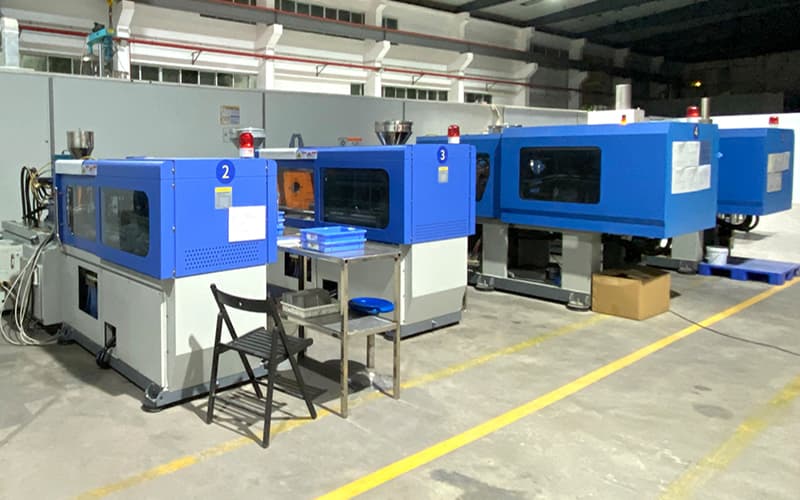
Injection Machine
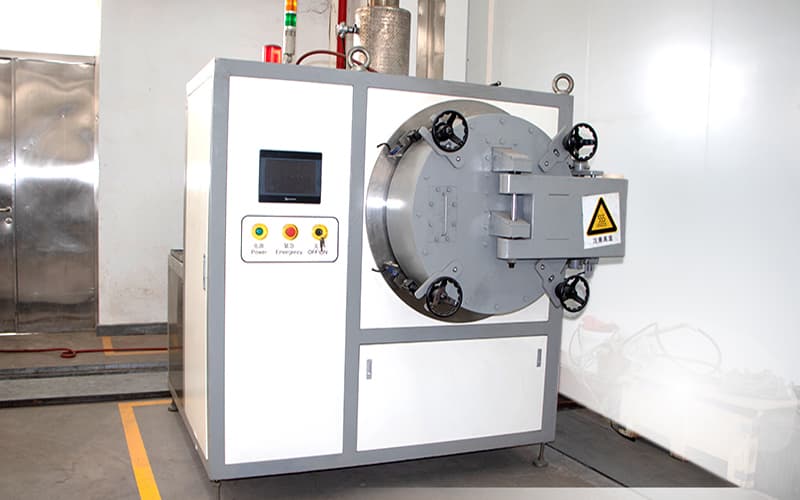
Catalytic Debinding Furnace
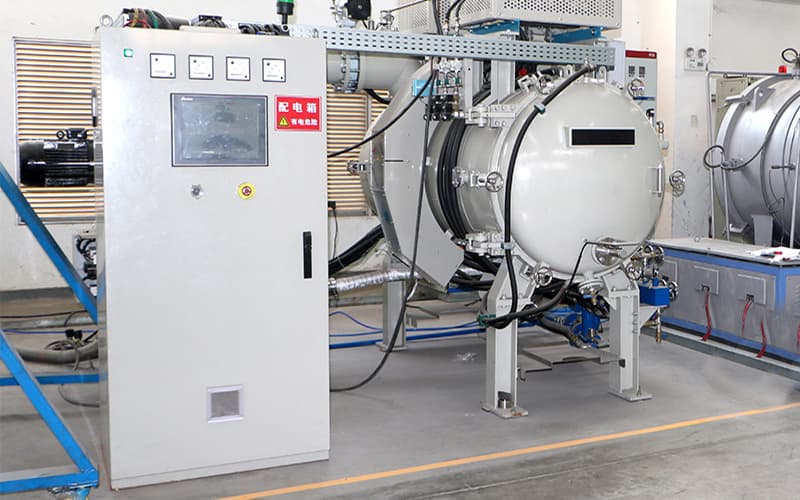
Vacuum Furnace
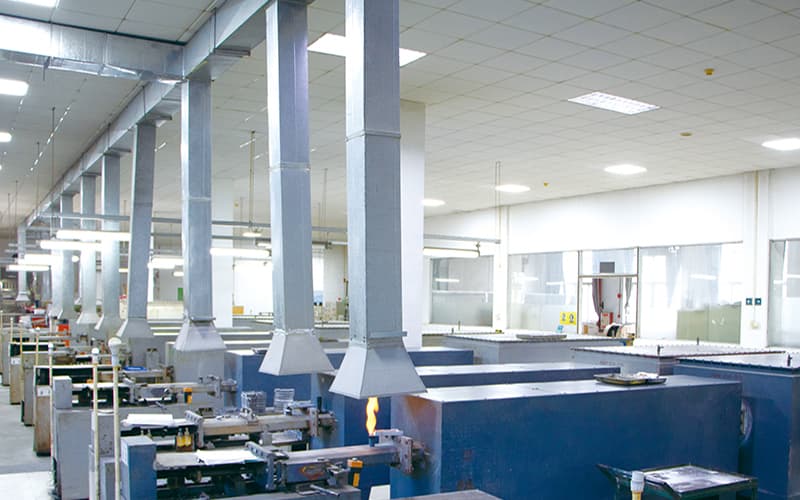
Atmosphere Protection Push Plate Sintering Furnace
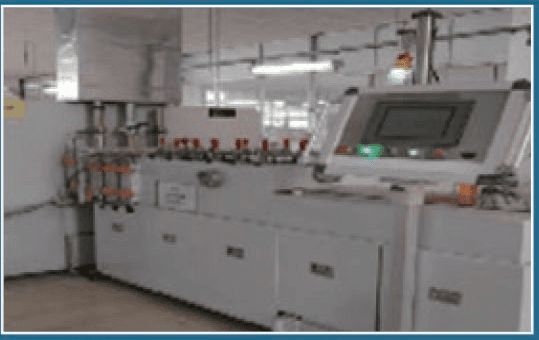
Continuous Push Plate Sintering Furnace
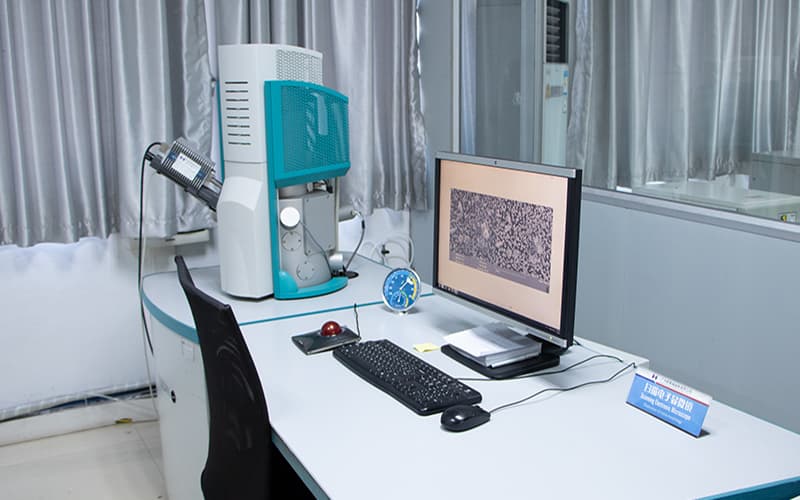
Scanning Electron Microscope (SEM)
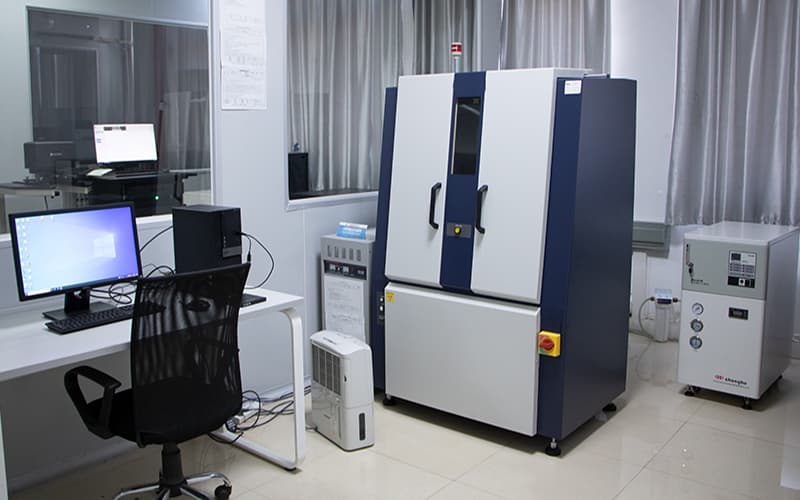
X-ray Diffractometer (XRD)
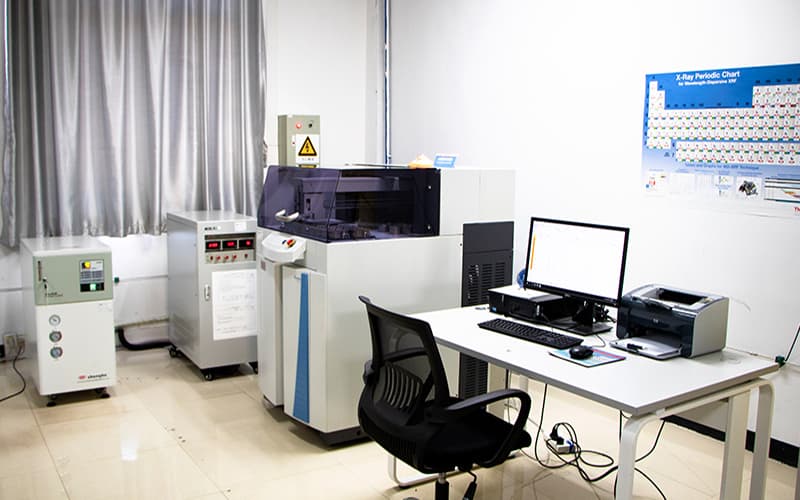
X-Ray Fluorescence Spectrometer (XRF)
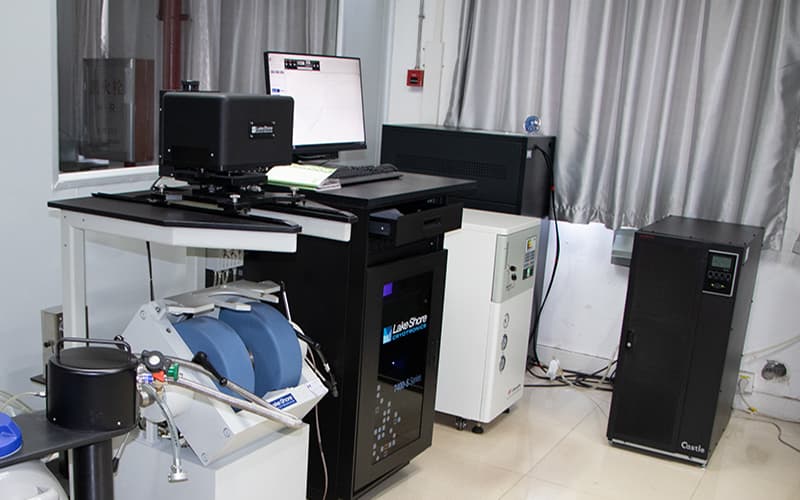
Vibrating Sample Magnetometer (VSM)
Mold lead time is typically 20 days; production lead time about 7 days, plus 3–5 days when secondary processing is required.
Need MIM parts built to your drawings?
Send us your 2D/3D drawings — our engineers will evaluate feasibility and get back to you within one business day.