
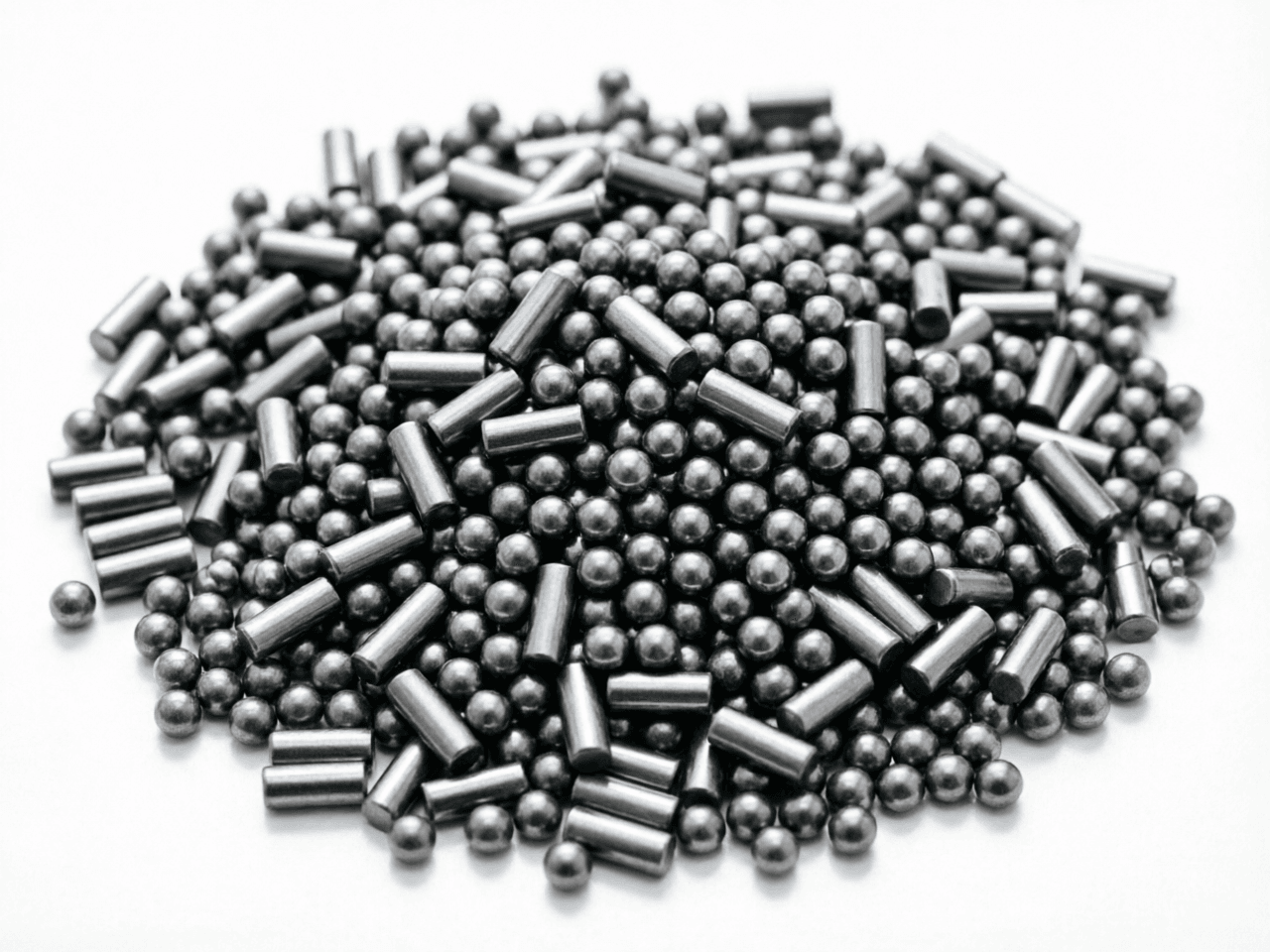
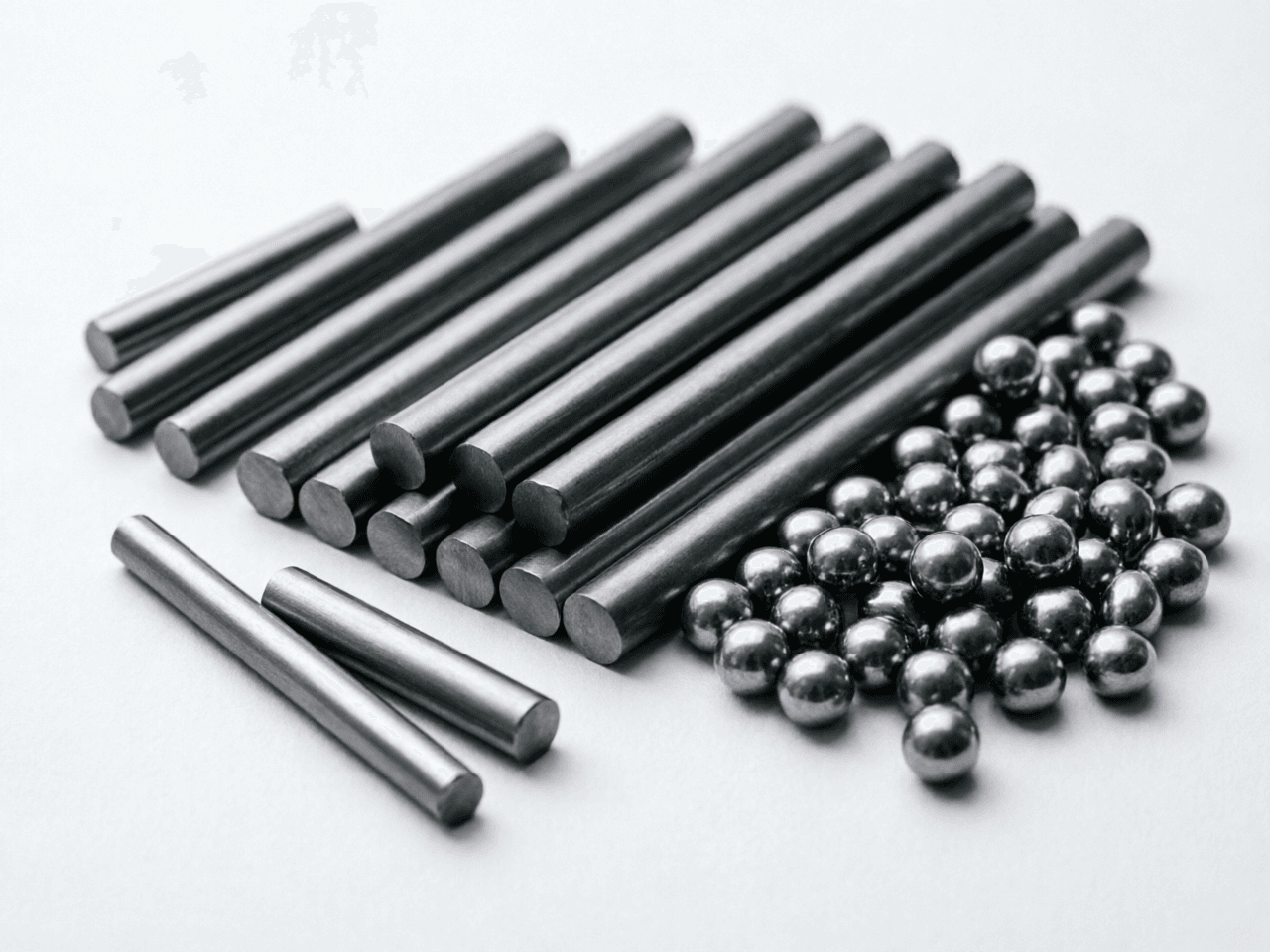
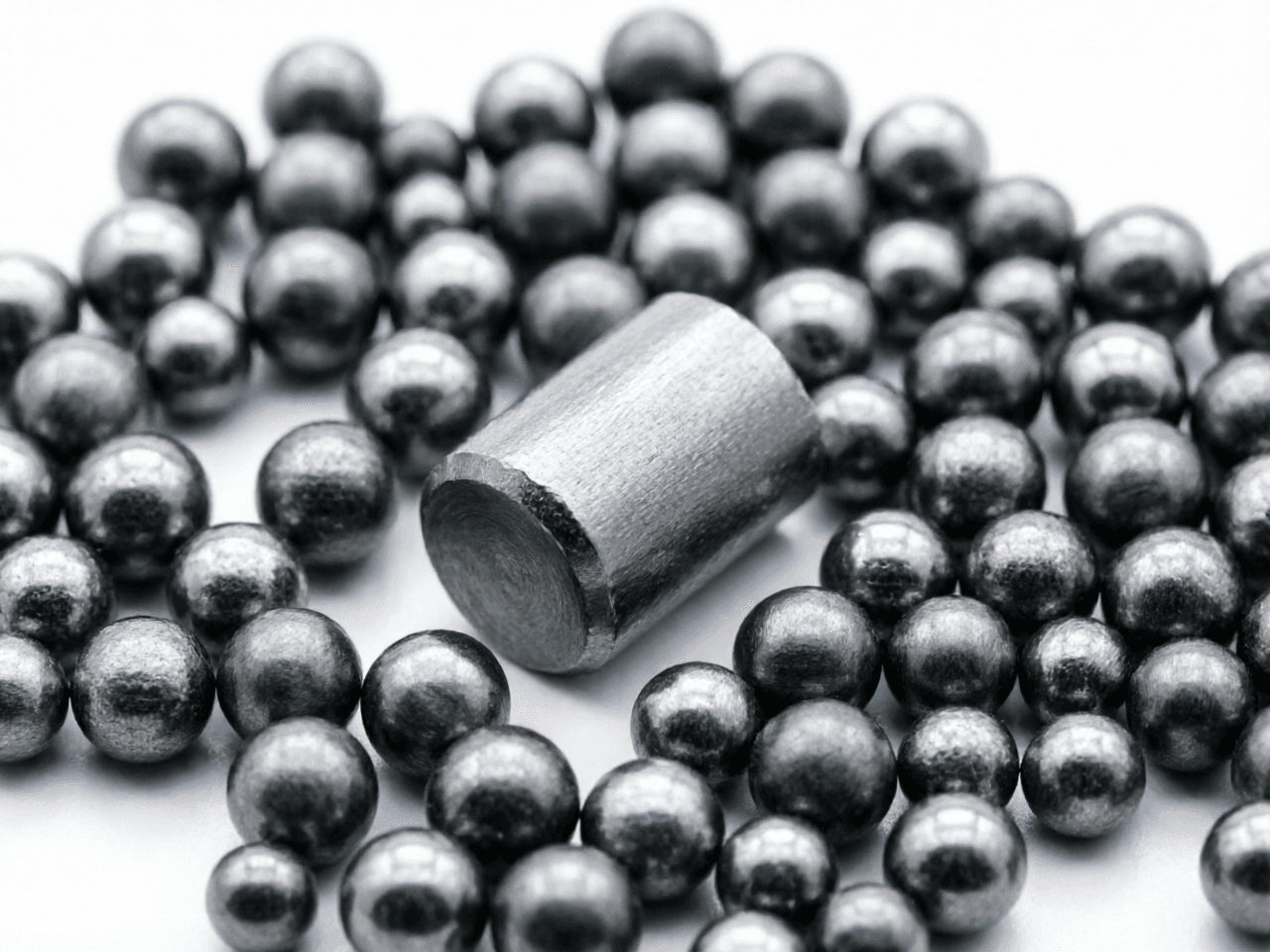
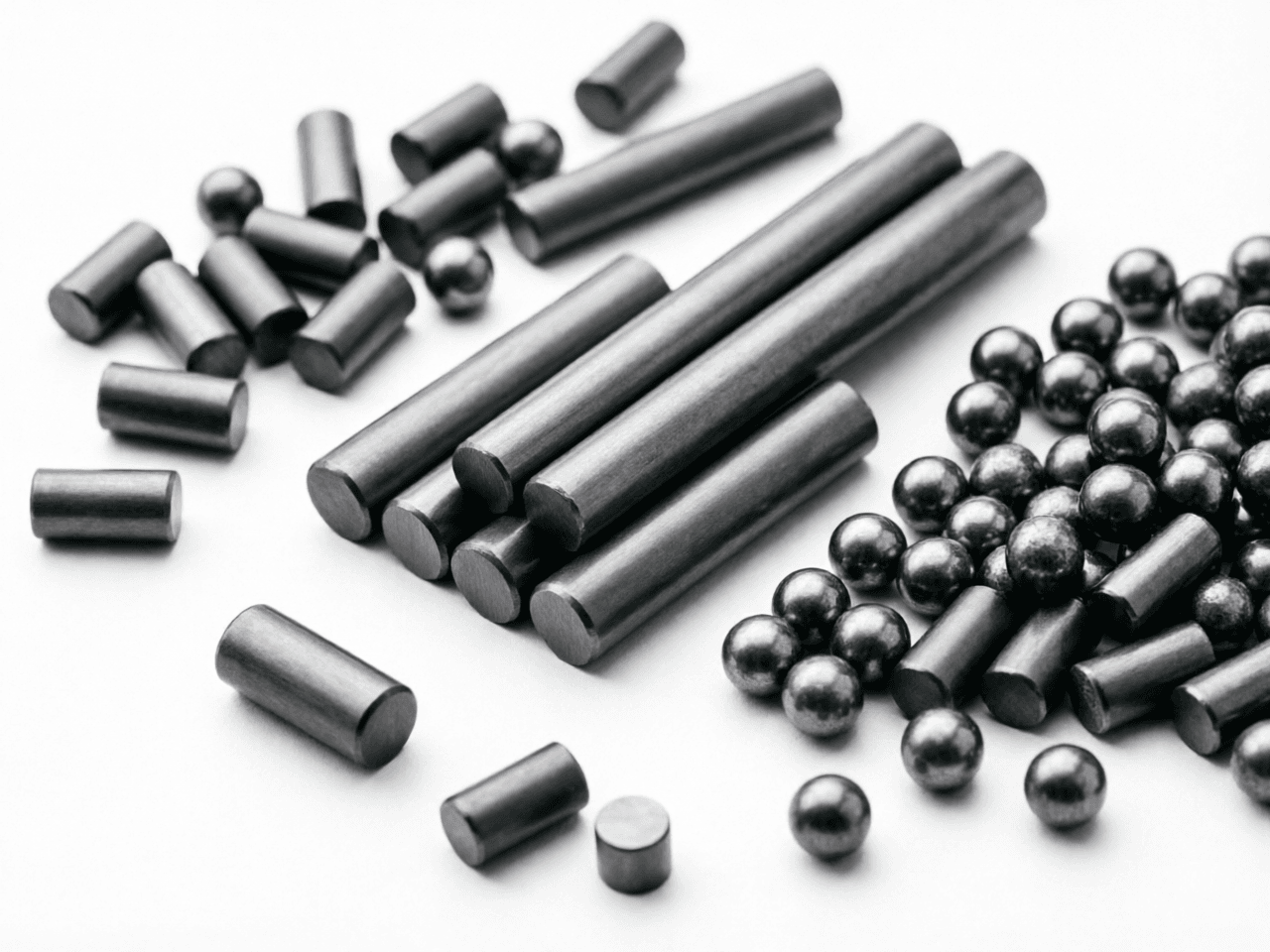
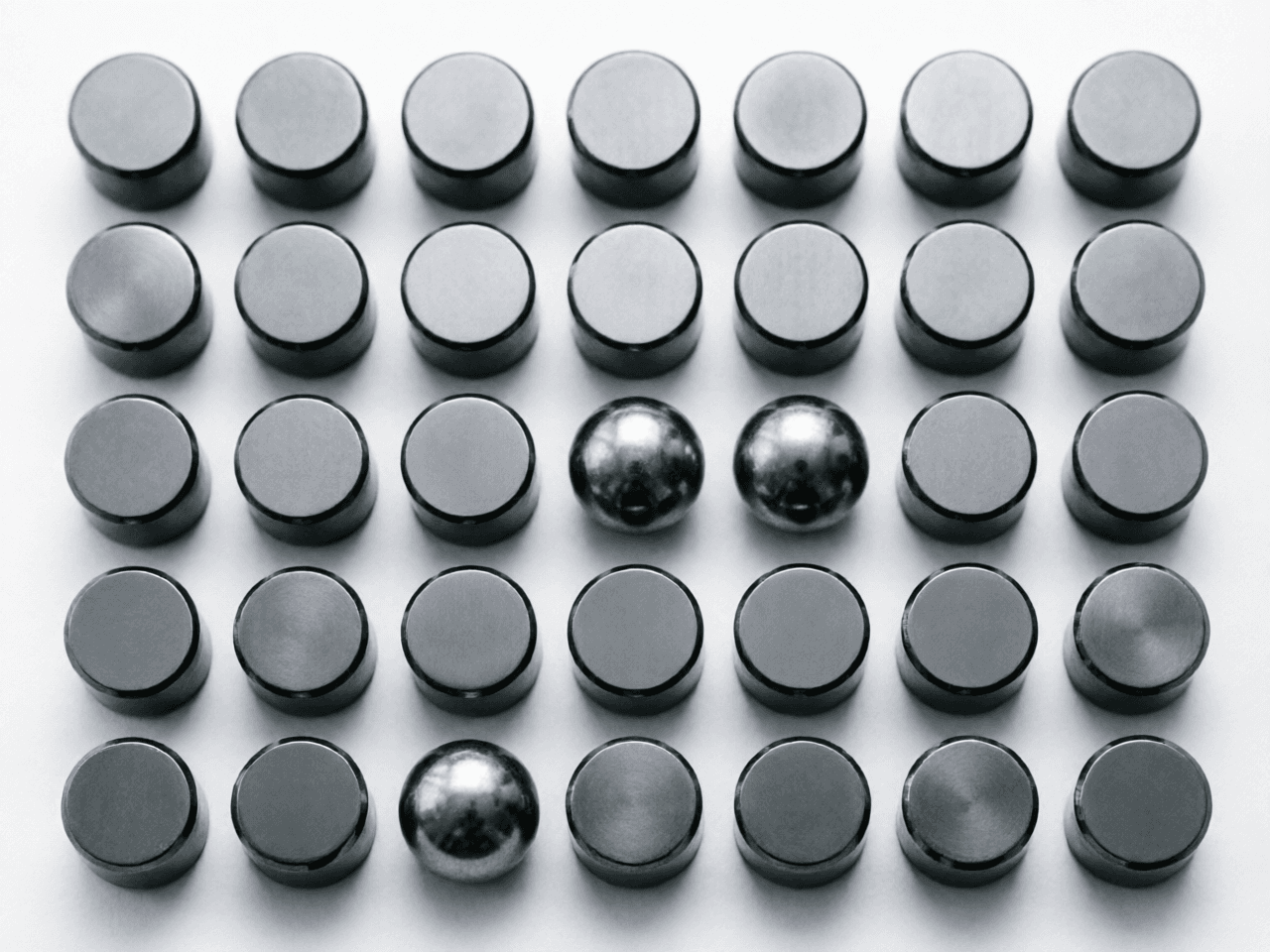
Tungsten Alloy Grain
Tungsten alloy grains for sports goods counterweights, aircraft and tank counterweights.
- Materials
- W-Ni-Fe
- Application
- Sports goods counterweight, aircraft counterweight, tank counterweight, etc.
Specifications
| Parameter | Value |
|---|---|
| Material | W-Ni-Fe |
| Diameter | 1.0–25.0 mm |
| Density | 13.5–18.2 g/cm³ |
| Hardness | HRC > 23 |
| Tensile Strength | > 900 MPa |
| Ductility | > 10% |
Frequently Asked Questions
What sizes of tungsten alloy grain do you produce?
Standard diameter range is 1.0–25.0 mm in W-Ni-Fe, with density 13.5–18.2 g/cm³, hardness HRC > 23, tensile strength > 900 MPa and ductility > 10%. Non-standard sizes can be discussed against your drawing or target weight per grain.
Where are tungsten alloy grains typically used?
Typical uses are sports goods counterweights (fishing, golf), aircraft counterweights and tank counterweights — anywhere a precise amount of mass must be packed into a small cavity. Grains are easy to dispense and fill, which simplifies balancing and assembly.
Why tungsten grain instead of lead or steel shot?
At 13.5–18.2 g/cm³, tungsten alloy is far denser than steel (~7.8 g/cm³) and lead (~11.3 g/cm³), so the same weight takes much less volume. It is also non-toxic compared with lead and far more heat-resistant — important for aerospace and defense-adjacent counterweight applications.