
Toyota to build its next EV in China first, under Lexus
Published:
Republished by Newlife - MIM. All rights belong to the original publisher; see Source below.
Japanese automakers are ceding their limited in-house BEV expertise, instead contributing their badge and tuning on top of it.
Toyota will build its next-generation battery-electric vehicle (BEV) in China before anywhere else, marking a rare break from the company’s usual practice of debuting new technology in Japan first. The model, to be sold under the Lexus brand, will be produced at a plant in Shanghai starting in autumn 2027, beginning at a modest 1,000 vehicles a month before scaling to tens of thousands annually by 2028.
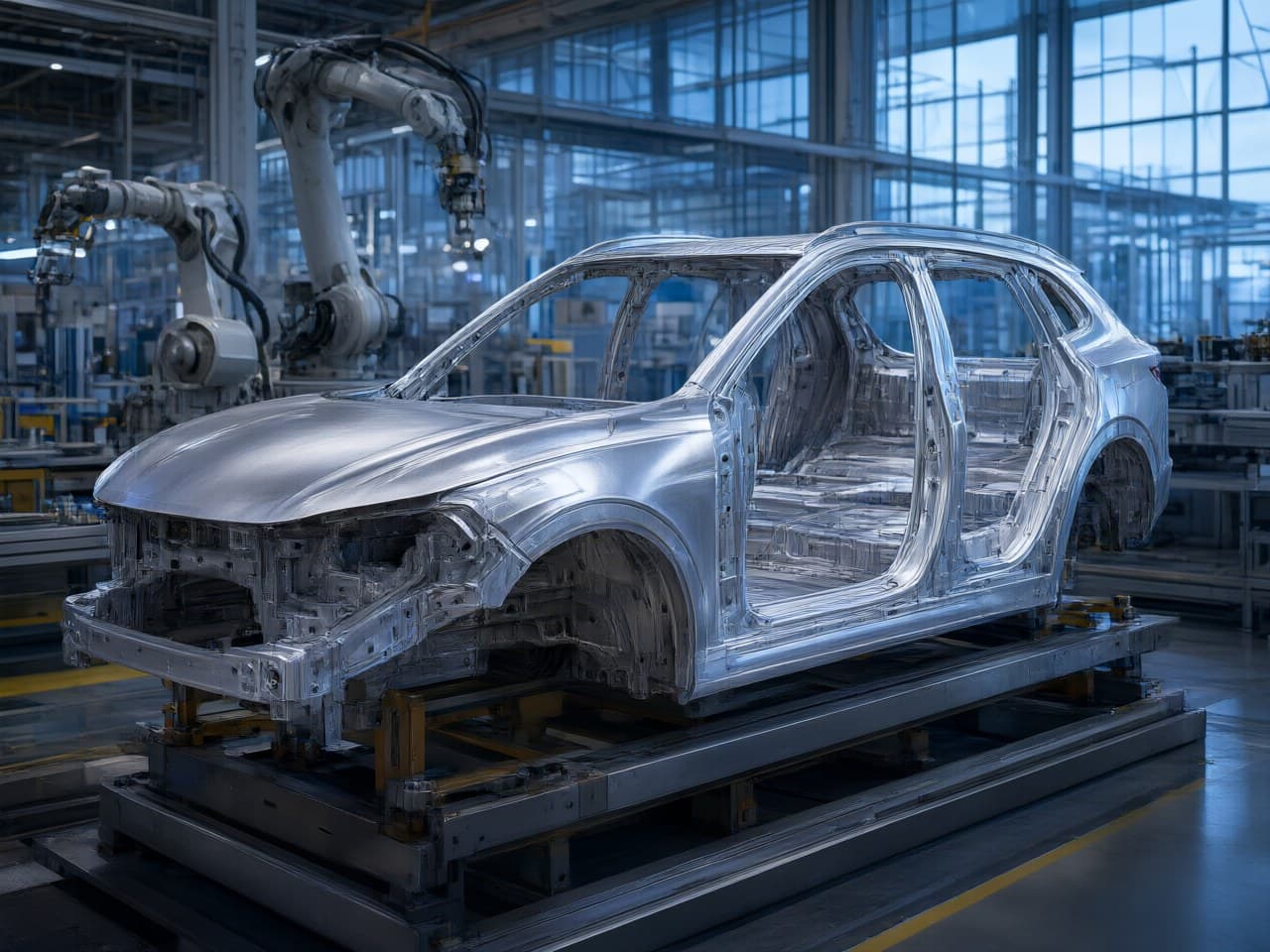
The vehicle will use gigacasting, a manufacturing technique that moulds multiple aluminium body sections into a single large piece, cutting the weight of those sections by up to 20%. This weight reduction offers an estimated boost of around 4-5% to a typical BEV’s driving range, while making the body more rigid and simplifying assembly. Earlier in 2026, Toyota halted development of a separate electric coupe in Japan, redirecting toward the SUV format Chinese consumers generally prefer.
The scale of China’s BEV market explains the shift. China accounted for 8.57 million BEV sales in 2025, 60% of the global total and roughly triple Europe’s volume and more than a hundred times Japan’s, according to GlobalData. Despite a backsliding car market overall, local BEV sales are forecast to reach 11.41 million by 2030. In July, retail car sales fell 20.9% year-over-year to 1.46 million units, but the decline was driven almost entirely by a plunge in internal combustion engine (ICE) vehicles, which collapsed 44%. Plug-in hybrids also fell by 21.1% while BEVs grew 6%, according to China Passenger Car Association data.
Like many Japanese automakers, Toyota’s professed multi-pathway strategy towards zero-emissions leans primarily towards hybrids and more efficient ICE for the US and Japan. Increasingly, it is leaning towards BEVs for Chinese consumers, where its existing lineup already comprises an entry-level SUV and a sedan. Leveraging this local expertise for global markets is logical, perhaps even necessary given the steadily rising popularity of BEVs in European markets and elsewhere.
Toyota’s move fits a pattern already well established among its domestic rivals. Honda has renewed its GAC joint venture through 2038 and already reverse-imports right-hand-drive Odyssey minivans built in China back to Japan. Honda is also importing its next Insight BEV from China rather than building it domestically. Nissan is shipping China-built BEVs including the N7 sedan under an explicit “developed in China, validated globally, sold globally” strategy.
Mazda exports its China-built 6e sedan and upcoming CX-6e SUV to right-hand-drive markets, even as it separately cuts its own domestic BEV spending.
The underlying economics are consistent across all these moves. Sourcing batteries and components in China saves an estimated 30-40% against manufacturing in Japan, Europe or North America, and Chinese modular BEV platforms compress development cycles from the traditional four to five years down to 18-24 months. Nissan is separately targeting 26 months for its own development timeline, and Volkswagen has partnered with Chinese automakers to release up to 50 models for the Chinese market by 2030.
Launching under the Lexus badge rather than Toyota looks like a deliberate choice to test the approach on a smaller, higher-margin production run first, consistent with the gradual ramp from 1,000 to tens of thousands of units. The strategy also stacks gigacasting’s cost and weight savings on top of the localised battery sourcing already driving down costs across the wider Japanese industry.
Japanese brands’ combined market share in China has declined from roughly a quarter in 2020 to around 13% today. What began as individual automakers responding to sales decline has hardened into a shared strategic template: develop in China, validate globally, then export everywhere except the US. The latter, where tariffs exceeding 100% on Chinese-assembled BEVs still make the approach largely unworkable, remains off limits.
Source
- Automotive World (2026-08-28) - Original article: Toyota to build its next EV in China first, under Lexus