
Thailand Bets on Humanoid Robots: BOI Invests 15 Billion Baht to Forge a New Growth Engine
Published:
This article is reposted by Newlife - MIM. The copyright belongs to the original author; the original link can be found at the end of this article under "Sources".
Thailand Bets on Humanoid Robots:
BOI Invests 15 Billion Baht to Forge a New Growth Engine
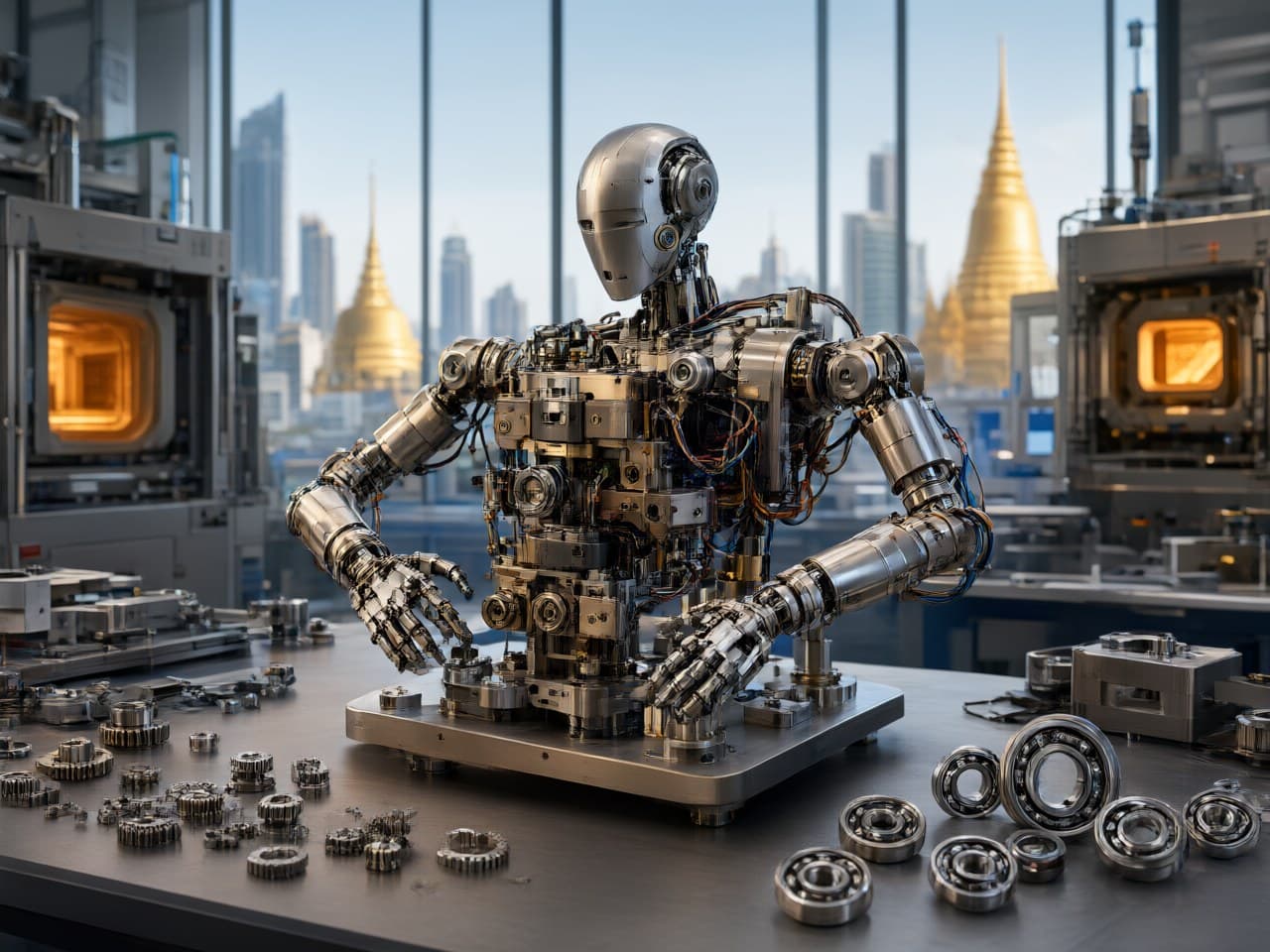
According to Thailand Headlines, the Board of Investment of Thailand (BOI) is accelerating its strategic layout in the humanoid robot industry. The plan leverages Thailand's existing industrial foundations in automotive, electronics, machinery and automation, and high-precision components to refine the robot supply chain. By attracting international enterprises to invest in Thailand, the initiative aims to propel the country from a robot component production base toward a comprehensive robot production and assembly hub.
Narit, Secretary-General of the BOI, stated that humanoid robots are regarded as a crucial industry for Physical AI. With the continuous development of artificial intelligence, sensors, computing systems, and motion control technologies, the ability of humanoid robots to perform complex tasks is constantly improving. In the future, they are expected to be widely applied in industrial and service sectors to address issues such as labor shortages and population aging.
Narit pointed out that Thailand has a solid industrial foundation in automotive and components, electronics, machinery and automation, and high-precision components. These sectors can be further extended to produce complex, high-value-added components such as robot drive systems, motion control equipment, electronic components, and sensors.
He noted that humanoid robots are not only an emerging industry but also a new growth engine for Thailand's industrial upgrading. The BOI will promote the establishment of a robot and automation industry cluster, strengthen the local supply chain, and attract more industrial activities related to high-tech and high-skilled talent to land in Thailand.
Since early 2026, the BOI has approved support for 10 humanoid robot component production projects, with a total investment of 15 billion baht. These projects cover products including robot skeletons, joint control components, mechanical arms, and robotic fingers, encompassing high-precision metal parts, motion systems, and high-efficiency transmission components. This lays the foundation for Thailand to further establish a robot industry cluster.
In addition, during his visit to China in July this year, Anutin, the Prime Minister and Minister of Interior of Thailand, held talks with the management of robotics technology company Agibot. He invited the company to invest in Thailand and apply related technologies in agriculture, smart manufacturing, healthcare, elderly care, and service sectors, thereby promoting Thailand to become the Physical AI center of ASEAN.
Narit pointed out that attracting international robot enterprises and key component manufacturers to invest in Thailand is only the first step. More importantly, it is essential to connect foreign investment projects with Thailand's existing industrial foundation to drive the development of local manufacturers and the supply chain.
Thailand currently possesses a relatively mature manufacturing base in automotive and components, electronics, machinery and automation, metals, molds, and high-precision components, which can be further transitioned toward the production of complex, high-value-added robot components. For example, production projects for planetary roller screws and ball screws required for humanoid robots plan to use entirely local Thai raw materials, including nut blanks, screw blanks, steel bars, shafts, cages, locknuts, steel balls, cover plates, and O-rings. This demonstrates Thailand's potential to further undertake the humanoid robot supply chain.
Meanwhile, the BOI will promote the connection between foreign-invested enterprises and local Thai suppliers through platforms such as Sourcing, Business Matching, and SUBCON Thailand. This will help Thai enterprises upgrade from general component production to high-value-added fields such as high-precision components, electronic systems, sensors, and control systems, striving to get more Thai companies on the global robot industry supplier list.
At the same time, Narit stated that Thailand has the potential to develop into a complete robot production and assembly base. However, when global enterprises choose production bases, they not only consider costs and investment incentives but also focus on evaluating the supply chain, talent, infrastructure, and industrial ecosystem.
Therefore, in the next stage, Thailand needs to further attract investments from key component and technology enterprises while enhancing the capabilities of local manufacturers, cultivating high-skilled talent, and promoting engineering and R&D activities to gradually form economies of scale in the robot industry.
In terms of talent, Thailand's existing workforce in automotive, electronics, machinery, automation, and mechatronics can be further redirected to the robot industry. However, since humanoid robots involve multiple specialized fields such as robotics, mechatronics, artificial intelligence, software, control systems, sensors, and precision engineering, Thailand still needs to accelerate the expansion of its talent pool and improve professional skills.
Currently, the Skill Bridge program launched by the government and the BOI has approved 35 projects, covering skills training for 66,500 people. This aims to cultivate the high-skilled talent required by the new generation of industries through upskilling and reskilling.
In the long run, Thailand needs not only to increase the quantity of talent but also to enhance its comprehensive capabilities ranging from production and system control to engineering, design, system integration, and R&D. This will ensure that the development of the robot industry simultaneously elevates Thailand's technological and talent levels.
Furthermore, Narit added that the BOI will encourage enterprises to increase high-value-added activities in Thailand through investment incentive policies, such as R&D, engineering design, high-skilled talent cultivation, and local supplier development, thereby promoting technology transfer by enterprises.
Technology transfer can be achieved through cooperation and training between enterprises and Thai talent, supplier development, and collaboration with universities and research institutions. Enterprises are also encouraged to establish R&D centers in Thailand.
He pointed out that as the supply chain for key components, professional talent, and technological foundations are gradually improved, Thailand will further enhance its attractiveness to global robot enterprises. In the future, it is expected to upgrade from a robot component production base to a significant robot and automation production base in ASEAN.
Sources
- Thailand Headlines (2026-08-19) - Original link: Thailand Bets on Humanoid Robots: BOI Invests 15 Billion Baht to Forge a New Growth Engine