
Robots Built by Automakers... Hands with Tactile Sensors and 360-Degree Rotating Joints
Published:
Republished by Newlife - MIM; copyright belongs to the original author; the original link is available at the "Sources" section at the end of this article.
Hyundai Motor Group has unveiled its future blueprint for AI robot technology collaborating with humans. Robots are no longer just "machines" replacing humans in dangerous operations; instead, the group has proposed the goal of "digital colleagues," aiming for human-robot coexistence and collaboration based on robot commercialization. On the 5th (local time), at the CES 2026 media day held in Las Vegas, USA, Hyundai Motor Group unveiled its human-centric AI robot technology ecosystem strategy under the theme "Partnering Human Progress: AI Robot Technology Beyond the Lab and Into Life" (According to the Chosun Ilbo Chinese Edition).
This marks a further step from Hyundai's CES 2022 theme, "Expanding the Boundaries of the Mobility Experience." While the previous theme aimed to expand the concept of mobility such as automobiles, over the past three years, cars have evolved into SDVs (Software-Defined Vehicles), and robots have also entered an era where performance is determined by software and data.
At this year's CES, the core proposition by Hyundai Motor Group is "Embodied AI," which goes beyond hardware-centric robots to perform cognition, judgment, and action in the real world. Simultaneously, three major long-term strategic roadmaps were proposed: ▲ Human-robot collaboration starting in manufacturing environments, ▲ Integrating group affiliates to build an AI robot technology ecosystem, and ▲ Partnerships with AI pioneer enterprises.
First Global Reveal of the Next-Generation Humanoid Robot "Atlas"
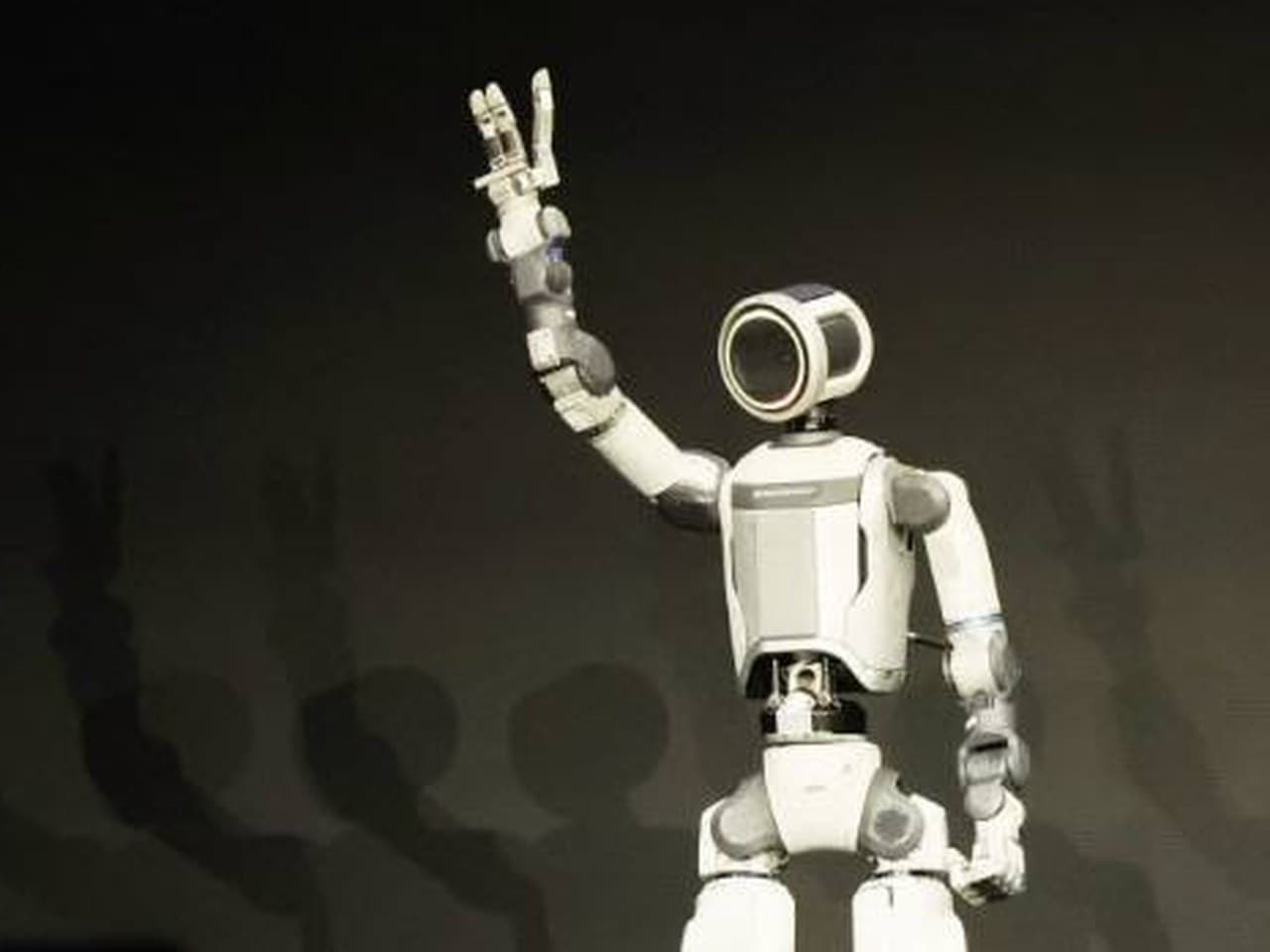
At this CES, Hyundai Motor Group globally unveiled the physical prototype of its next-generation electric humanoid robot, "Atlas," for the first time. Co-developed with Boston Dynamics, the U.S. subsidiary of Hyundai Motor Group's robotics business, Atlas comes in two versions: a research prototype and a product-oriented development model for actual field use.
The development version of Atlas can mimic and perform human-like tasks through its 56 degrees of freedom (DOF) in the full-body joint structure, hands equipped with tactile sensors, and cameras capable of 360-degree recognition. It can lift items weighing up to 50 kilograms and deliver full performance in diverse environments ranging from -20°C to 40°C.
Hyundai Motor Group plans to deploy the robots in phases at Hyundai Motor Group's U.S. factory in Georgia (HMGMA), starting in 2028. Initially, they will be introduced to processes where safety and efficiency have been verified, such as parts sorting. After 2030, they will be expanded to assembly and other tasks to broaden the scope of operations. The group will expand the scope step by step, prioritizing safety and quality. The robots will first engage in simple, repetitive, high-weight, and high-risk tasks to support a safe working environment for factory workers. Once safety and quality are verified, the scope of application on the production site will be gradually expanded.
Cultivating Robots in "Software-Defined Factories"
The core of Hyundai Motor Group's AI robot technology strategy is the manufacturing site. The group has designated HMGMA as a "Software-Defined Factory" (SDF), planning to use it as a testing ground for robot learning and validation. An SDF is an advanced smart factory operated based on data and software. In the process of maximizing flexibility across the entire manufacturing process to improve production efficiency, robots are expected to play a crucial role.
To enhance the learning and performance of AI robots, the factory will provide a robot development environment based on complete vehicle manufacturing data. This allows robots to learn using actual process data, and the data accumulated during this process will, in turn, drive the advancement of robot performance, creating a virtuous cycle.
To this end, Hyundai Motor Group plans to establish a robot-specific learning space, the "Robot Mega-factory Application Center (RMAC)," in the U.S. by the end of the year. At RMAC, data accumulated by robots pre-trained through mapping-based learning will circulate with practical data learned at the SDF, undergoing repeated retraining.
The division of labor among Hyundai Group's affiliates has also been clarified. Hyundai Motor and Kia will provide manufacturing infrastructure and process data; Hyundai Mobis will supply core components such as actuators for robots; and Hyundai Glovis will be responsible for logistics automation and supply chain optimization. Hyundai Motor Group has set a goal to build a mass production system capable of producing 30,000 robots annually by 2028.
Partnering with NVIDIA and Google DeepMind to Strengthen the "AI Brain"
Hyundai Motor Group is also strengthening its AI competitiveness through partnerships with global tech giants. Hyundai has established a strategic partnership with NVIDIA to realize Embodied AI, actively utilizing NVIDIA's GPUs, simulators, and AI frameworks. Recently, Hyundai also collaborated with South Korea's Ministry of Science and ICT to enhance the nation's Embodied AI capabilities.
Boston Dynamics is collaborating with Google DeepMind to develop an AI foundation model specifically for humanoid robots. An AI foundation model refers to an AI/deep learning model trained on extensive data to be applicable to various tasks. Google DeepMind is continuously optimizing the "Gemini Robotics" model based on its generative AI model, Gemini, with the goal of integrating it with Boston Dynamics' world-class robotics technology. Jack Yakovsky, Head of Atlas Development at Boston Dynamics, stated, "The convergence of robotics and AI goes beyond mere technological advancement; it is a new innovation that makes human life safer and more prosperous." He added, "The strategic integration of strengths between Boston Dynamics and Google DeepMind will be a crucial step in redefining the future industrial paradigm."
Robots Enter the "Subscription" Era... Expanding Across Industries with RaaS
Not content with merely selling robots, Hyundai Motor Group will also introduce the "Robots as a Service" (RaaS) model. Customers can opt for subscriptions or pay-per-use models instead of purchasing robots outright. The company will also provide services such as software upgrades, maintenance and warranties, and remote management.
Through this, Hyundai Motor Group plans to expand its robotics business into multiple industries, including manufacturing, logistics, construction, and facility management. The strategy also proposes that by 2030, through massive investments in the AI and robotics sectors, the group will become one of the core pillars of the global robot ecosystem. In South Korea, over the five years up to 2030, Hyundai plans to execute a record-breaking investment totaling 125.5 trillion KRW (approximately 606.3 billion RMB). In the U.S., it will invest USD 26 billion over four years starting in 2025, with a core focus on investing in future new technology areas such as AI, autonomous driving, and robotics in collaboration with U.S. enterprises.
A representative from Hyundai Motor Group stated, "For Hyundai Motor Group, what matters is not what technology can do, but what humans can achieve through technology." "Hyundai will present a vision where humans and robots truly collaborate for human development, continuously practicing the corporate value of 'Progress for Humanity.'"
Sources
- Chosun Ilbo Chinese Edition (2026-08-20) - Original link: Robots Built by Automakers... Hands with Tactile Sensors and 360-Degree Rotating Joints