
Google Unveils Next-Generation Robotics AI Model, Targeting the "Dexterity" Challenge
Published:
This article is republished by Newlife - MIM, with copyright retained by the original author. Please refer to the "Sources" section at the end for the original link.
According to a July 31 report by Cailian Press, Google DeepMind has unveiled a brand-new artificial intelligence model tailored for robotics, claiming it can enable humanoid robots to coordinate full-body movements. This represents Google’s latest initiative to further extend its Gemini AI technology into the robotics sector, with the objective of equipping machines with reasoning capabilities, multi-step task planning, and the ability to adapt to human-centric environments.
The newly introduced system, named Gemini Robotics 2, enables robots to perform actions such as walking, squatting, and object manipulation while autonomously reasoning through and completing assigned tasks. Google stated that, unlike previous models that primarily focused on controlling upper-body movements, Gemini Robotics 2 achieves comprehensive whole-body control for humanoid platforms. In a pre-recorded demonstration, DeepMind’s new model directed Apptronik’s Apollo humanoid robot through a series of maneuvers, including navigating across a room, picking up a watering can, placing it on a shelf, and successfully avoiding obstacles along the path. Concurrently, DeepMind released two additional robotics AI models, which are designed to operate either collaboratively or independently.
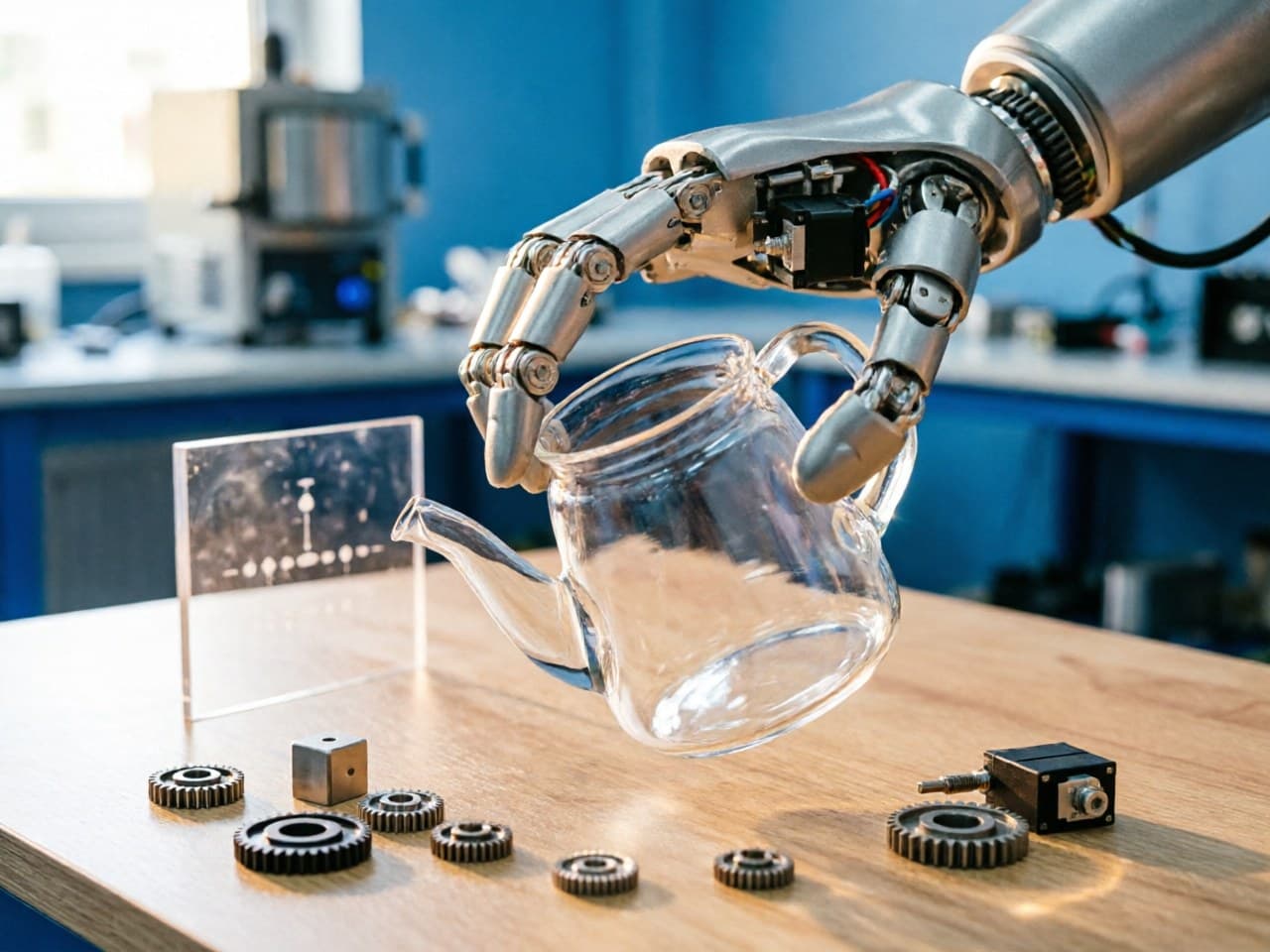
Specifically, Gemini Robotics 2 is responsible for translating camera feeds and natural language commands into motor control instructions for the robot. Meanwhile, Gemini Robotics ER 2 functions as the robot’s "reasoning system," tasked with planning multi-step operations and coordinating multiple robots to achieve a shared objective. Google also highlighted improvements in robotic dexterity. Researchers noted that during testing, the system achieved a 92% success rate in the task of "unscrewing a light bulb." However, success rates remain relatively lower for more complex operations, such as tying garbage bags or properly sealing Ziplock bags.
Furthermore, Google introduced a new robotics safety evaluation benchmark designed to test whether a robot can identify uncertain scenarios and refuse to execute commands that pose safety risks. Google emphasized that, compared to its predecessors, Gemini Robotics ER 2 is the company’s safest robotics model to date, demonstrating superior performance in instruction adherence and human avoidance protocols. The company announced that Gemini Robotics ER 2 will be made available through its developer platform, AI Studio, with a private preview offered on its enterprise-grade AI platform. More specialized models, including Gemini Robotics 2 and On-Device 2, will initially be rolled out to early partners and over 100 trusted testing institutions.
Google also confirmed it is opening a waitlist for developers to access the models and is actively collaborating with a core group of partners, including Apptronik, Agile Robots SE, and Boston Dynamics. Carolina Parada, Vice President of Robotics at DeepMind, stated during the introduction: "Our goal is to bring AI into the physical world and build a layer of intelligence that can be utilized by all robots."
However, Kanishka Rao, Director of Robotics at DeepMind, candidly acknowledged that achieving human-level dexterity in robots remains a long-term endeavor. Current robotic movements are still relatively slow and cautious, as machines must pause to process decisions that humans typically execute intuitively. Rao emphasized that robots' current learning efficiency still falls significantly short of human capabilities. While humans can often adjust their behavior after just one or two mistakes, robots remain at a considerable distance from reaching that level of adaptive learning.
This latest release builds upon Google’s 2025 launch of Gemini Robotics, which served as the robotics-specific iteration of the flagship Gemini AI model, capable of converting linguistic and visual data into actionable physical movements for robots.
This product launch also signals Google’s renewed commitment to a robotics strategy that spans over a decade. Alphabet previously acquired several robotics startups but subsequently scaled back related operations, culminating in the closure of its Everyday Robots division in 2023. Meanwhile, competitors such as OpenAI and Nvidia are actively expanding their footprint in robotics AI. OpenAI has been exploring a generalized robotics foundation model that integrates vision, language, and motor control, while Nvidia provides software platforms to assist developers in training AI-driven robots.
Sources
- tech.ifeng.com (2026-08-02) - Original Link: Google Unveils Next-Generation Robotics AI Model, Targeting the "Dexterity" Challenge | ifeng