
Copper’s supply squeeze spreads, market needs more metal - Mining.com.au
Published:
Republished by Newlife - MIM. All rights belong to the original publisher; see Source below.
The copper market’s supply squeeze is no longer confined to the mine.
As copper concentrate availability tightens, the pressure is being felt further down the supply chain, with smelters and fabricators turning towards recycled material to secure the feedstock they need.
The latest analysis by Shanghai Metals Market (SMM) highlights just how far that squeeze has spread.
As of 21 August 2026, SMM’s imported copper concentrate index fell to -USUSD 182.14 (-USD 254.26) per dry metric tonne, with negative treatment charges highlighting the competition among smelters for increasingly scarce concentrate.
The shortage is helping to support copper scrap prices, as companies look beyond traditional mined supply for alternative sources of the metal.
For copper, the development is considered important as it outlines a broader problem confronting the industry. The world needs more copper, but bringing new primary supply online is becoming more difficult.
As Mining.com.au reported earlier this year, the rate of finding new copper deposits has halved over the last decade.
MinEx Consulting Managing Director Richard Schodde says this is due to a 60% fall in funding grassroots exploration.
While grassroots discoveries have slowed, between 2010 and 2024, exploration at existing mines and projects undergoing Prefeasibility and Feasibility studies delivered four times as much copper as greenfield discoveries.
After accounting for 296 million tonnes (Mt) of mined production, total global copper resources still increased by 946Mt.
“So, the world is not running out of copper,” Schodde says.
A changing relationship
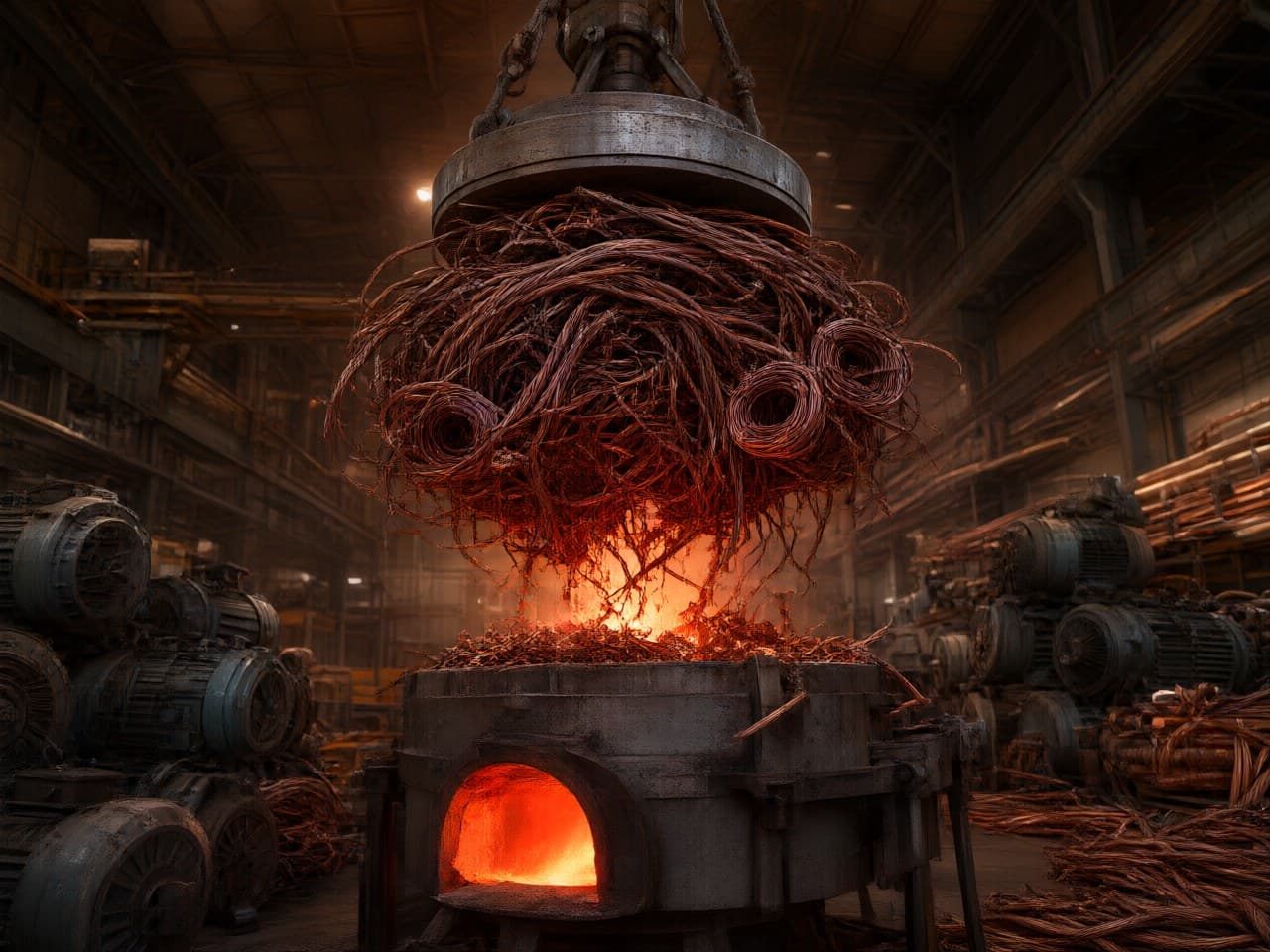
Copper scrap serves as a secondary source of metal, helping smelters and fabricators supplement primary concentrate and cathode supply.
However, SMM’s analysis suggests that the relationship is changing.
While concentrate treatment charges have fallen, recycled copper is becoming more attractive to smelters looking to reduce their reliance on mined concentrate. At the same time, copper scrap inventories have been drawn down, while new scrap generation is failing to keep up with demand.
So, even secondary supply may be becoming harder to secure.
China is a clear example of this, with SMM market surveys showing low tradeable copper scrap inventories held by Chinese companies.
Existing stocks are mainly no. 1 and no. 2 copper scrap, while ‘high-grade’ Millberry scrap remains relatively scarce, as reported by SMM.
Meanwhile, some tax-excluded material or cargoes with incomplete invoices continue to accumulate outside regular circulation channels. Physical inventories therefore do not fully represent the effective supply available to compliant companies.
SMM data also shows that copper scrap inventories in Japan and South Korea remain low, strengthening suppliers’ willingness to hold firm and supporting ‘high-grade’ scrap payabilities.
Why this matters
For existing producers, the current environment is potentially supportive.
Producers capable of delivering consistent, high-quality concentrate into a tight market could find themselves in a positive position, particularly where operations offer high grades, low impurities, or valuable by-products.
The same dynamics apply for developers and explorers. Developers can demonstrate that their projects show a credible pathway to production, competitive operating costs, and access to infrastructure. Meanwhile, explorers can show markets the possibility of finding the next copper deposit to supply future demand.
On the production front, Gunnison Copper (TSX:GCU) owns the Gunnison Project in Arizona, US, a fully vertically integrated operation producing finished copper cathode onsite for domestic US supply chains.
The mine plan consists primarily of oxide mineralised material, processing 541Mt @ 0.43% copper (Cu), including 25Mt @ 0.85% Cu from the Strong & Harris satellite deposit.
In mid-August, Gunnison Copper expedited a district-wide drilling program to support metallurgical optimisation, resource expansion, and conversion across the project. Up to 120 drill holes are planned for 42,000m of drilling.
CEO Craig Hallworth says completing initial metallurgical drilling at Gunnison and advancing work at Strong & Harris are ‘important’ milestones as the company continues to optimise the project and unlock additional value across the district.
“With six drill rigs expected to be operating in September, we’ll significantly increase the pace of drilling as we begin an exciting phase focused on expanding and upgrading the resource base,” Hallworth says.
“We believe the district offers exceptional potential to add additional mineral resources, as well as the possibility of [recovering] payable zinc and silver by-product credits, and we look forward to sharing preliminary results as they become available later this year.”
Opportunities in development and exploration
Meanwhile, Lincoln Minerals (ASX:LML) is developing its Minbrie Copper Project on South Australia’s Eyre Peninsula.
The project’s ‘standout’ intersection, 29.5m @ 0.8% Cu, 7.5% lead (Pb), 1.9% zinc (Zn), and 9 grams per tonne silver from 131.1m, highlights the ‘strong’ grades and scale potential at Minbrie.
Further analysis of historical drill data has also identified multiple untested target zones, with 85% of historical holes failing to reach the key mineralised horizon and only 16% of the prospective footwall sequence assayed for base metals.
In early August, the company confirmed mineralisation continued up dip at the Eagle Ridge discovery within Minbrie, which further supports a diamond drilling program planned for Q4 2026.
As reported, three holes that reached the basement were drilled at Eagle Ridge. Hole MBAC022 intersected 6m @ 0.26% Pb and 0.22% Zn from 90m on the eastern edge of the interpreted mineralised zone.
CEO Chris Wilcox says the program improved Lincoln’s understanding of the cover sequence and supported its geological model despite difficult drilling conditions.
“Our goal was to confirm this system, which it has done with these results, and we now have a clearer understanding of how to advance our exploration,” Wilcox says.
On the exploration front, Canada One Mining (TSX-V:CONE) is exploring British Columbia via its Copper Dome Project, which sits contiguous to Hudbay Minerals’ (TSX-V:HBM) Copper Mountain mine.
The 12,833-hectare project has seen extensive exploration over the years including magnetics and induced polarisation geophysical surveys, alongside several rounds of diamond drilling.
In early July, Canada One completed a phase one exploration program, with 12 rock samples collected and delivered to the laboratory for analysis.
Detailed 1:5,000-scale geological and alteration mapping was completed across the Boundary zone and Friday Creek targets, providing improved definition of lithological contacts, alteration patterns, and mineralised trends.
Field crews also continued prospecting in underexplored areas of the project, including the Copper Dome South and Copper Dome East zones.
At the Friday Creek zone, work focused on delineating surface mineralisation and improving geological understanding of the system.
CEO Peter Berdusco says advancing the company’s understanding of the mineral system at Copper Dome is key to guiding the systematic, multi-phase field programs.
“This work represents a strong start to the 2026 field season and will help inform subsequent exploration phases,” Berdusco says.
The tightening copper market highlights the importance of every stage of the supply pipeline.
Producers can benefit from growing competition for available concentrate, while developers have an opportunity to bring the next generation of projects towards production. Explorers are positioned to showcase how their discoveries are needed to fill the future’s supply gap.
Source
- mining.com.au (2026-08-30) - Original article: Copper’s supply squeeze spreads, market needs more metal - Mining.com.au